
The Tudela artichoke, recognised with Protected Geographical Indication (PGI), has established itself as one of the most prized ingredients in contemporary haute cuisine. Its origins in the vegetable gardens of Navarre, its traditional cultivation methods and its exceptional organoleptic properties —firm texture, delicately bitter flavour and compact centre— make it a culinary gem that goes beyond traditional recipes to feature in cutting-edge dishes.
The purpose of this article is to explore how the most discerning chefs incorporate Tudela artichokes into their haute cuisine dishes, ranging from classic techniques such as confit or low-temperature cooking, to more innovative uses in mousses, crisps, stocks or molecular cuisine. We will also explore its role in tasting menus, the rise in its use in plant-based cuisine and its versatility as a product of premium preserve, suitable for both restaurants and discerning consumers.
1. Why is it a star ingredient in haute cuisine?
Unique organoleptic properties
The Tudela artichoke It is prized by haute cuisine chefs for its an exceptional balance between texture, flavour and cooking performance. Grown in accordance with the requirements of the PGI, this variety — the Blanca de Tudela — possesses qualities that set it apart from all others:
- Firm and juicy texture, which retains its shape even after prolonged cooking, allowing it to be used in complex techniques without losing its structure.
- A delicate flavour with bitter notes, highly prized in haute cuisine for its ability to bring out the flavour of fattier or sweeter ingredients.
- A pale greenish colour, which, if handled with care, does not rust excessively, adding a touch of elegance to the presentation of the dish.
- A compact, clean engine, free from internal fibres and evenly shaped, ideal for recipes that require aesthetic and sensory precision.
These qualities make the artichoke not just a side dish, but a centrepiece in high-end culinary creations.
Culinary versatility: from a supporting role to the star of the show
One of the key reasons why the Tudela artichoke shines in haute cuisine is its wide adaptability to a range of cooking techniques, ranging from traditional dishes to avant-garde creations. It can play various roles in a dish:
| Technique | Application | Desired result |
| Candied | Slow cooking in oil at a low temperature | Enhances natural softness and sweetness |
| Grilled | Quickly sear in oil or butter | Crispy on the outside, tender on the inside |
| Sautéed | Quick preparation with herbs and spices | Aromatic intensity, contrast of flavours |
| Light frying | Tempura or battered dishes on the tasting menu | A crunchy touch in complex dishes |
| Stock or broth | Used as a vegetable base in stocks and sauces | Depth and nuances of umami |
| Emulsions or purées | Flavoured with butter or premium oils | A base for creams or subtle accompaniments |
Thanks to its a stable structure and a distinct but not overpowering flavour, the Tudela artichoke It can function both as a key ingredient and as a technical support ingredient in more complex dishes, pairing well with meat, fish, seafood and 100 % vegetable dishes.
2. Gourmet techniques for cooking it
The Tudela artichoke It is not only a symbol of Navarre’s vegetable gardens, but also a top-quality ingredient in contemporary cuisine. Thanks to its firm structure, delicate flavour and a clean finish, is suitable for a range of techniques in the gourmet cuisine, both traditional and avant-garde. Below is a list of the most notable preparations used by professional chefs:
Slow-cooked at a low temperature
- Method: Cook the artichoke slowly in flavoured oil (for example, with garlic, thyme or bay leaves) at a controlled temperature between 70 and 80 °C for about 30–40 minutes.
- Result:
- This gives a extremely tender texture, almost buttery, whilst ensuring the artichoke retains its shape.
- It retains all its subtle nuances of flavour and aroma, enhanced by the aromatic herbs.
- Common uses:
- As refined incoming, served with flaked salt and a hint of citrus.
- Garnish for red meat, oily fish or eggs cooked at a low temperature.
This method is commonly found on haute cuisine menus, such as in dishes created by Pilar Idoate or on contemporary tasting menus.
Controlled griddle and grill
- Asparagus and artichokes They are excellent for grilling, thanks to their firmness and ability to caramelise without falling apart.
Artichoke:
- Technique:
- Cook briefly in water with lemon.
- Dry thoroughly and mark on a very hot griddle or grill until golden lines appear.
- Add a pinch of flaked salt and a good extra virgin olive oil.
- Result:
- Gold exterior, slightly crunchy.
- Juicy interior and with a toasty aroma.
- Culinary example: Sautéed with Iberian ham or as a base for a gourmet open sandwich.
In creams, pâtés and emulsions
- Gentle creams:
- Ideal as a vegetable base for white fish or poultry dishes.
- It can be emulsified with butter, cream or even white truffle oil.
- Vegetable pâtés:
- Mix artichoke hearts with foie gras, mature cheese, almonds or mushrooms.
- Served in tartlets, on toast or in small appetiser spoons.
| Preparation | Culinary use |
| Light cream | A base for hake, sea bass or scallops |
| Whipped emulsion | A mild sauce for lamb or Iberian pork |
| Artichoke pâté | Cold starters, tapas, brunch or cocktails |
Innovative culinary techniques (molecular gastronomy)
The Tudela artichoke has also made its mark in the field of molecular and experimental cuisine, thanks to its concentrated flavour and versatile texture:
- Artichoke mousse:
- Made using a siphon, vegetable cream and a fine purée.
- Ideal as a light accompaniment to smoked meats or seafood.
- Concentrated gels:
- A reduction of cooking liquid, thickened with agar-agar or pectin.
- It adds vegetable umami to contemporary dishes.
- Crispy crisps:
- Ultra-thin sheets, dehydrated and fried at a low temperature.
- Used as topping or decoration in haute cuisine dishes.
These techniques place the artichoke firmly within the realm of the most creative gastronomy, without losing its natural identity.
3. Standout dishes at leading restaurants in Navarre
The Tudela artichoke, thanks to its certified quality and versatility, has become a key ingredient in the menus of haute cuisine in Navarre and beyond. Iconic restaurants and renowned chefs have featured it as a main ingredient or accompaniment, making the most of its unique qualities: its tender texture, balanced flavour and ability to blend into creative recipes and technically demanding dishes.
Below are some of the top dishes in which the Tudela artichoke takes centre stage as a culinary highlight.
Jerusalem artichoke and langoustine soup (Pilar Idoate)
A creation by the renowned Navarran chef Pilar Idoate, showcased at nationally recognised cooking demonstrations, such as those on RTVE or at food fairs.
- Featured technique:
- The The artichoke is candied beforehand at a low temperature to preserve its texture and flavour.
- It is then added to a cream of Jerusalem artichoke (also known as “Jerusalem artichoke”), with an earthy, subtly sweet flavour.
- The ensemble blends in with sautéed langoustines, adding a very elegant maritime contrast.
- Culinary value:
- This dish represents the a symbiosis between the sea and the orchards of Navarre, making the most of seasonal produce.
- It stands out for its balance between technical sophistication and respect for the natural product.
Vegetarian menu at the Remigio Hotel and Restaurant (Tudela)
El Remigio is one of the leading names in plant-based cuisine in Navarre. Its a tasting menu consisting exclusively of vegetables, which is deeply rooted in Tudela’s traditions, gives the Tudela artichoke a starring role.
- It includes dishes such as:
- Artichokes in brine with crispy Iberian ham.
- Artichoke confit on a bed of red onion with a piquillo pepper emulsion.
- A vegetable sorbet made with artichoke and pear as an experimental dessert.
| Type of dish | Featured recipe | Technique used |
| Starter | Artichoke marinated in citrus | Mild pickle |
| Home | Artichoke stuffed with leek and truffle | Sous-vide cooking + gratin |
| Creative dessert | Vegetable sorbet with hints of artichoke | Controlled freezing and emulsification |
- Relevance:
- This menu shows how artichokes can be used from starters to dessert, reaffirming its versatility and potential in signature cuisine.
Artichokes with clams and ham: a traditional dish with a modern twist
A classic dish from Navarre that has been given a modern twist by many signature restaurants.
- Concept:
- Merger of umami flavours (cured ham and seafood stock).
- The artichoke is grilled or confit, whilst retaining its firmness.
- The clams open when steamed, releasing juices that blend into the base of the dish.
- Gourmet varieties:
- Replacing the ham with Iberian pork jowl or crispy cured pancetta.
- Use of reduced stock to enhance the marine hues.
- Culinary value:
- This recipe represents the a dialogue between tradition and the avant-garde, with refined techniques and high-quality local produce as the common thread.
4. Dantza formats for professional use
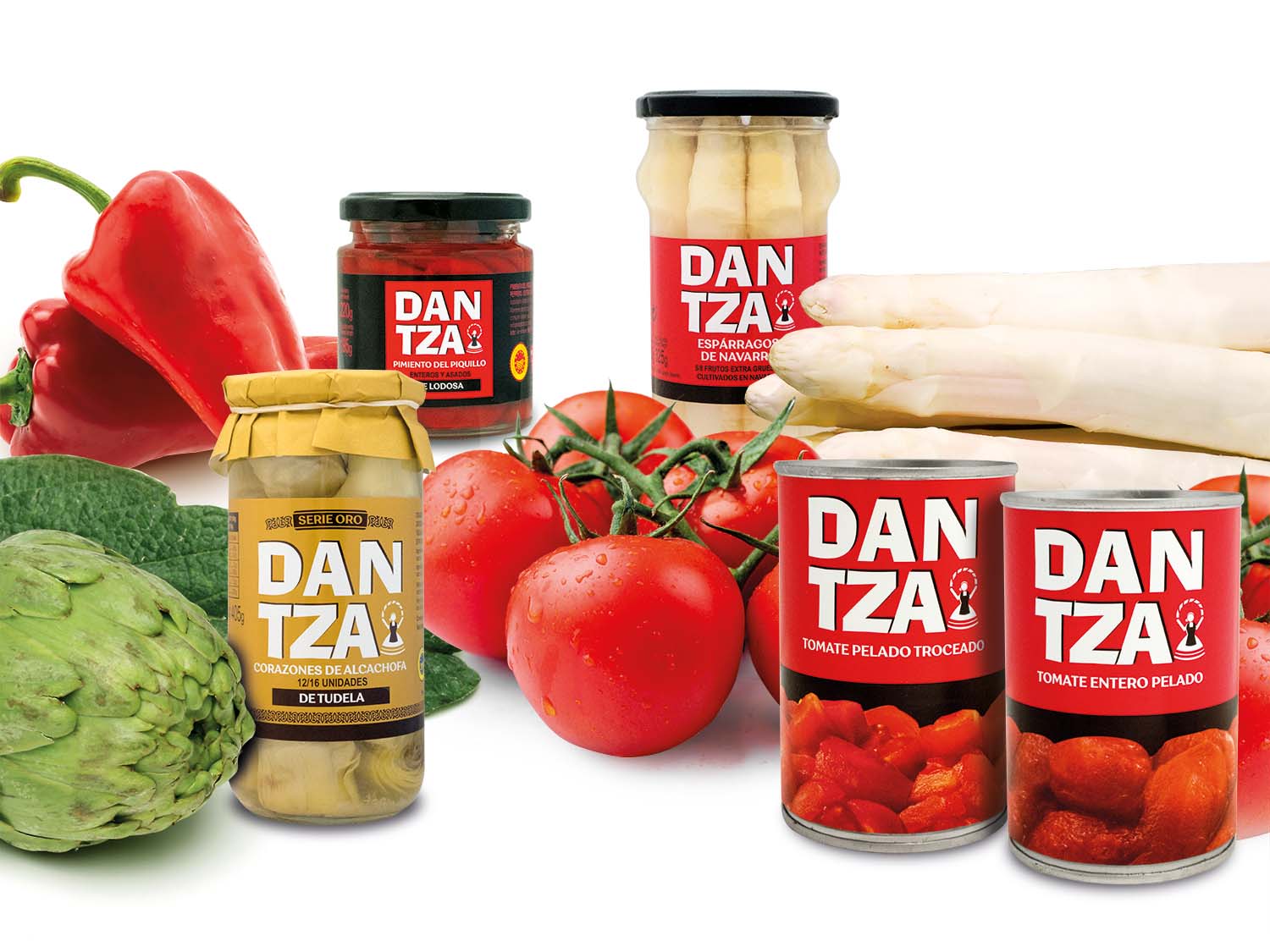
In the restaurant and haute cuisine sector, operational efficiency, product standardisation and sensory quality These are key aspects. For this reason, Dantza – a company specialising in tinned vegetables from Navarre’s market gardens – has developed specific formats for professional kitchens, which save time, ensure consistency and preserve the organoleptic excellence of the product.
The following details the Ways to prepare Tudela artichokes the most sought-after by chefs and professionals in the HORECA sector:
Store in a glass jar
One of the Dantza brand’s most iconic designs. Its main appeal lies in the product purity and food safety.
- Technical specifications:
- Artichoke plain, with no added acidifiers.
- It is preserved using only water and salt; the Natural pH (≥ 5.0) ensures stability without altering the original flavour.
- They are used exclusively pure hearts of the Blanca de Tudela variety, harvested during the season regulated by the PGI.
- Benefits for the professional channel
- Long service life and storage at room temperature.
- Visibility of the product from the outside: checks on size and presentation.
- Consistency in texture and flavour, which makes it easier to plan menus and food lists.
| Parameter | Approximate value |
| Commercial format | 370 ml and 720 ml jars |
| Final pH of the product | ≥ 5.0 |
| Conservation | A dry, cool storeroom |
| Service life | 4 years (closed) |
Fillets or portioned hearts
Designed for fast-casual dining, gastropubs or high-volume kitchens that require agility without compromising on quality.
- Functional advantages:
- Ready-to-use portions, straight from the jar or bag onto the plate.
- A drastic reduction in the handling and cleaning time.
- They facilitate Neatly arranged plates and elegant presentations, whilst maintaining its shape and structure.
- Ideal for:
- Warm or cold starters.
- Gourmet tapas or pintxos.
- Side dishes to accompany meat, fish or vegan dishes.
Ready-made combinations
Dantza also offers customised solutions such as creams, purées, pâtés or vegetable bases, made from Tudela artichokes with Protected Geographical Indication (PGI).
- Suggested culinary uses:
- Sauce base in fusion cuisine.
- Vegetable pâté for appetisers or high-turnover pintxos.
- Emulsions or bases for signature dishes.
- Career benefits:
- They are maintaining the the plant’s authentic nature, but they allow for creative freedom in record time.
- Ideal for catering companies, hotels and restaurants which require functionality without compromising on quality or flavour.
| Format | Quick application | Requires cooking | Final texture |
| Pâté | Toast, starters | No | Creamy and thick |
| Cream | Base for dishes and sauces | Optional | Smooth, even |
| Background | Reduction or soups | Yes | Smooth and stable |
 English (UK)
 Español
 Français
 繁體中文