
Not all asparagus is the same. In a market where the range of products on offer is ever-increasing, identifying an authentic, high-quality product is becoming essential. The Navarre asparagus, with its distinctive delicate flavour, tender texture and a balanced hint of bitterness, stands out from the rest. But its excellence is no accident: it is the result of a centuries-old agricultural tradition, a unique environment and a rigorous certification of origin.
The Protected Geographical Indication (PGI) Navarre Asparagus confirms that these asparagus come from more than 250 municipalities located in Navarre, La Rioja and Aragon, areas which share unique conditions of fertile soil, a temperate climate and traditional farming methods. This certification guarantees that production, processing and packaging all take place entirely within the protected area, ensuring the product’s traceability and authenticity.
1. Recognising the PGI label – a guarantee of quality
What does PGI stand for?
The Protected Geographical Indication (PGI) It is much more than just a visual symbol: it is a official European certification which guarantees that the product possesses a specific quality, reputation or characteristics attributable to its geographical origin. In the case of the Asparagus from Navarre, this seal certifies that:
- The cultivation, harvesting, handling, processing and packaging have been carried out in full in the defined area (Navarre, La Rioja and Aragon).
- The following are used traditional white varieties, mainly Blanca of Navarre, suited to the local climate and soil.
- The product has undergone thorough checks on the part of the Regulatory Council, which verifies compliance with the requirements set out in the tender specifications.
This recognition not only protects consumers, but also supports the efforts of farmers, cooperatives and canning companies committed to traceability and quality.
How to identify it on the packaging
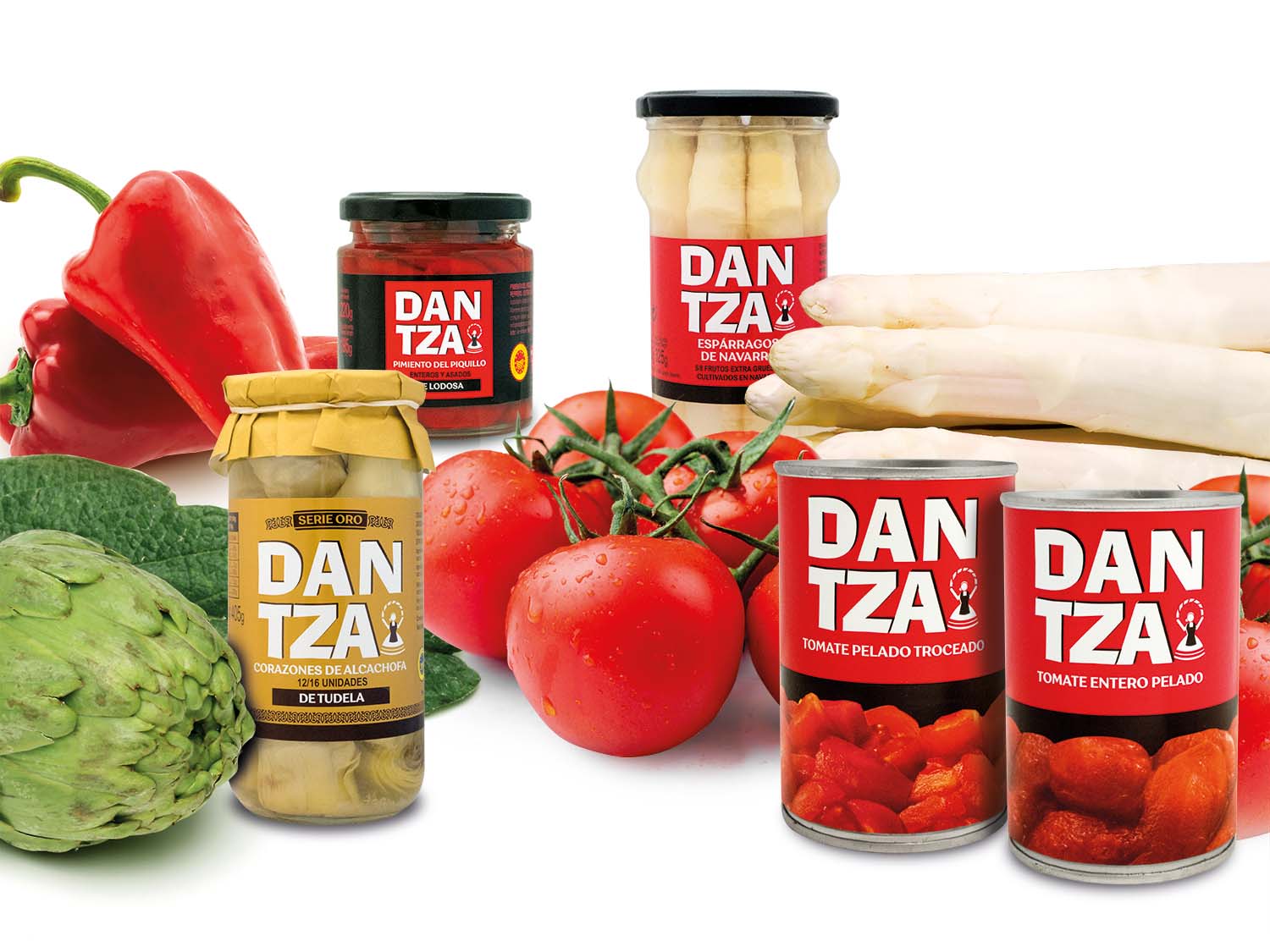
When buying tinned asparagus, it is essential to know read the labelling carefully. Genuine ‘Espárrago de Navarra’ with PGI status must have the following characteristics:
| Item in the packaging | What does this mean? |
| PGI logo | It indicates that the product is protected by a European designation. |
| Numbered back label | Issued by the Regulatory Council. Each number allows its origin to be traced. |
| Special mention: “Navarre Asparagus” | Protected name; it must be displayed clearly and prominently. |
| Geographical indication | Navarre, La Rioja or Aragon, depending on the location of the production plant. |
| Clear list of ingredients | No preservatives or artificial additives – just asparagus, water and salt. |
These guidelines enable consumers to distinguish genuine asparagus from generic products, which are often labelled using confusing terms or sourced from third countries without any guarantees of traceability.
2. Size, texture and yolk: key elements
Choosing good asparagus isn’t just about size. There are visual and tactile criteria which determine their actual quality, both fresh and preserved. In Dance, these factors are essential to ensuring an exceptional product.
Size isn’t always everything
Although the thickness may catch the eye, Good asparagus can be recognised by its balance of size, firmness and texture. The ideal appearance includes:
- Straight shape, without any bends or distortions.
- Firm texture, which does not bend or break easily.
- Uniform white colour, with no rust or stains.
- A firm, compact yolk, with no signs of opening or flowering.
A thick, poorly peeled asparagus spear can be stringy; a thin but well-shaped one, on the other hand, can be excellent.
In the case of Navarre asparagus with PGI status, all permitted sizes have passed strict selection criteria, which is why even the finest ones retain flavour, texture and certified quality.
Which one should you choose depending on how you’ll use it?
Here is a practical guide to choose the right size depending on the dish or the desired presentation:
| Calibre (diameter) | Type | Recommended use |
| 6–8 mm | Fine | Tapas, pintxos, cold salads or light side dishes. |
| 8–12 mm | Thick | Main courses, mild stews, grilled asparagus. |
| >12 mm | Extra thick | Haute cuisine, individual presentations, gourmet plating. |
Each calibre offers a different experience. Whilst the finest ones are versatile and fresh, the coarser ones offer a a meatier texture and enable stylish presentations with sauces, reductions or fillings.
3. Fresh produce and tinned food: what to bear in mind
When it comes to high-quality asparagus, both the fresh and tinned varieties have unique advantages. Understanding the differences between them enables us to an informed choice based on the season, culinary use and storage.
Fresh asparagus
Fresh asparagus from Navarre is a seasonal produce, available only between April and June, and they require careful handling to preserve their properties.
Key points to bear in mind when buying them:
- Colour: A bright, even white colour, with no green patches or pink spots.
- Skin: smooth and unblemished, without wrinkles or dryness.
- Yema: tightly closed and compact.
- Stem: firm and free from cracks; if it bends easily, it has gone off.
- Conservation: keep at constant cold (0–4 °C) and with high humidity to prevent dehydration.
Fresh asparagus is ideal for recipes that call for a firmer texture, such as steaming, grilling or low-temperature cooking.
Tinned asparagus
Tinned white asparagus from Navarre is an excellent way to enjoy this produce all year round, without compromising on quality.
Conservation process at Dantza:
- Manual selection of high-quality specimens.
- Brief blanching to preserve texture.
- Packaged in a mild brine, with no artificial preservatives.
What to bear in mind when choosing a high-quality tinned product:
| Criterion | What to look for |
| Steering fluid | Clear, with no cloudiness or particles. |
| Clear labelling | Simple ingredients: asparagus, water and salt (no added sugar). |
| Presence of the PGI mark | Guarantees certified origin and quality. |
| Colour and texture | White, uniform, with no fibrous parts or rusty patches. |
Thanks to careful processing, Dantza tinned asparagus retains its nutritional properties, its tenderness and its delicate flavour.
Which one should I choose?
Both formats have their place in the kitchen:
- Fresh produce is ideal for seasonal recipes and dishes prepared to order.
- Tinned food is versatile, ready to eat and high quality all year round, especially if it bears the stamp PGI Navarre Asparagus.
4. Price versus quality: a cost-effective balance
When you’re looking to buy high-quality asparagus, price may seem to be a decisive factor. However, it is essential to understand what is actually being paid when choosing a product with Protected Geographical Indication (PGI) as opposed to low-cost options of unknown origin.
Why do PGI asparagus cost more?
The average price of a drained kilo asparagus PGI Navarre Asparagus is around 25 €/kg, whilst the imported asparagus or those without a quality mark can be found at €11–13/kg.
This price difference it is not arbitrary, but rather is the result of a combination of factors that contribute to actual value to the product.
Comparison: PGI asparagus vs standard asparagus
| Criterion | Asparagus PGI (Navarre) | Standard/imported asparagus |
| Origin | Navarre, La Rioja and Aragon (Spain) | Peru, China, other unspecified countries |
| Collection | Manual, at its best | Mechanical or uncontrolled |
| Traceability | Supervised by the Regulatory Council | Not always guaranteed |
| Flavour and texture | Soft, fibre-free, with a firm centre | Variable, possibly woody in texture |
| Sustainability | Local production, lower carbon footprint | International transport |
| Local economic support | Promotes employment in rural areas of Navarre | It does not contribute to local development |
What are you paying for when you choose PGI asparagus?
- Authenticity: a product linked to a particular region and tradition.
- Quality assured: requirements regarding size, appearance, texture and flavour.
- Social responsibility: support for farmers, co-operatives and local employment.
- Sustainability: Less transport, smaller ecological footprint.
How can you tell if cheap asparagus is any good?
If you come across some asparagus with a price tag significantly lower, see:
- Product origin: Is it Navarre or a country without PGI regulations?
- Tag: must include the PGI label y numbered back label.
- Appearance of the asparagus: Avoid those with split tips, stringy bits or cloudy liquid in the jar.
 English (UK)
 Español
 Français
 繁體中文